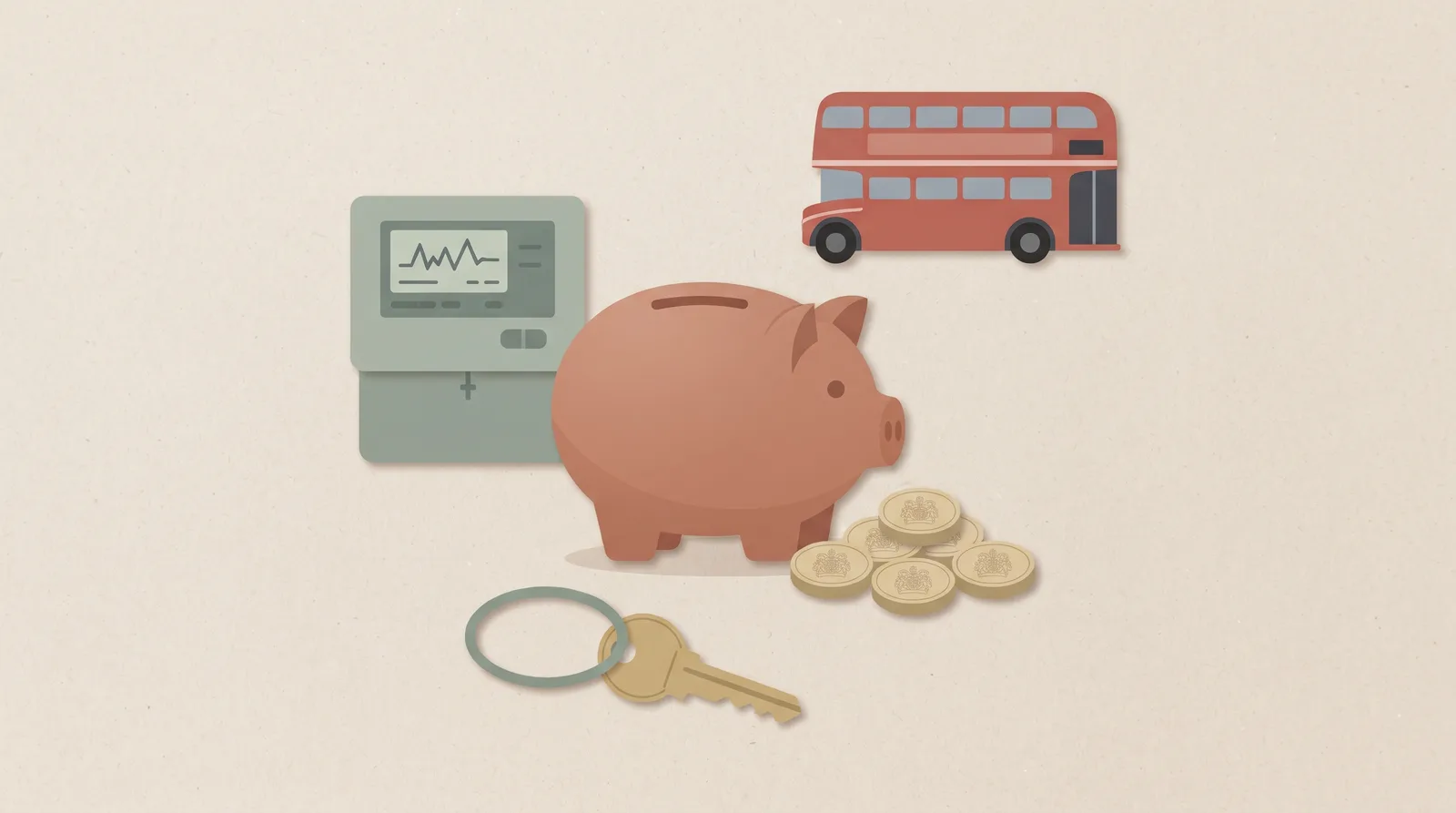
Chancellor John Healey presented the 2026 UK Budget on Wednesday 28 October, announcing a series of measures aimed at helping households with rising living costs.
While national Budgets can sometimes sound like complicated government talk, several of these announcements could make a difference to everyday household costs.
Key points at a glance
- £100 energy payment: A one-off payment for eligible households in council tax bands A to D.
- Gas bills: Daily gas standing charges will be removed during 2027, or as soon as possible afterwards.
- Electricity bills: The zero-VAT measure will continue until July 2027.
- Bus fares: Eligible single bus journeys in England outside London capped at £2 from January to December 2027.
- Fuel duty: The existing 5p reduction is being maintained, with fuel duty frozen at 52p per litre.
- State Pension: Pension payments expected to increase from April 2027 under the triple lock.
- Minimum wage: National Living Wage and National Minimum Wage rates will increase by 3.9% in April 2027.
- First-time buyers: The new Your First Home scheme will offer eligible buyers a 2.5% deposit option with a 20% government equity loan.
Energy bills and household support
Energy costs remain a major concern for many households, particularly during the winter months. The Budget included several measures aimed at reducing household energy costs.
£100 energy payment
Around 20 million households across England living in council tax bands A to D will receive a one-off £100 energy payment. The payment will be made directly into eligible households' bank accounts. Many households may qualify, but eligibility will depend on the council tax band of the property.
Gas standing charges to be removed
One of the biggest changes announced is the removal of daily standing charges from household gas bills. At present, households pay a fixed daily charge to their energy supplier simply for having a gas connection, even if they use very little gas.
The government has asked Ofgem to remove these charges for around 23 million homes during 2027, or as soon as possible afterwards. The current average gas standing charge is around £108 a year. The government estimates that around 60% of households could save an average of £45 a year.
Electricity VAT reduction extended
The government removed VAT from household electricity bills from 1 October 2026. This measure will now continue until July 2027. The reduction is expected to keep the annual energy price cap around £50 lower than it would otherwise have been.
Bus fares and driving costs
£2 bus fare cap returns
Single bus fares in England, outside London, will be capped at £2 from 1 January until 31 December 2027. The scheme replaces the existing £3 fare cap.
For people travelling along the Coventry Road corridor, this could be useful when commuting towards Birmingham city centre, Solihull and the airport. Services such as the 60, X1 and X2 are important routes for local residents — though the £2 cap will depend on the participating services and eligible single tickets.
Fuel duty remains frozen
The Chancellor confirmed that fuel duty will remain frozen at 52p per litre, including the existing 5p reduction. For people who rely on their cars for work, school runs and shopping, this continues to avoid an additional increase in fuel tax. The actual price at petrol stations will continue to depend on wholesale fuel prices and retailer pricing.
Pensions, wages and family support
State Pension increase
The State Pension will continue to increase under the triple lock. Based on the reported 3.9% earnings increase, the full new State Pension is expected to rise to approximately £250.70 a week from April 2027. The basic State Pension is expected to reach approximately £192.10 a week. These are projected rates — the final figures are to be confirmed through the government's pension rate announcements.
National Minimum Wage increase
The National Living Wage and National Minimum Wage rates are set to increase by 3.9% from April 2027. The increase will benefit eligible workers, including people working in retail, hospitality, cleaning, care and other local businesses.
Support for self-employed parents
The government will extend statutory parental pay to eligible self-employed fathers, partners and adopters in Great Britain from April 2029. People who are recently employed, unemployed or have irregular employment patterns may also qualify, provided they meet the required work and earnings conditions. The government expects the arrangement to benefit more than 150,000 parents each year.
Changes to Carer's Allowance
Currently, carers can lose their entire Carer's Allowance payment if their earnings go just above the weekly earnings limit. Under the new system, for every additional £1 earned above the limit, the allowance will reduce by £1 rather than being stopped completely. This change is expected to start during 2030–31 once the Department for Work and Pensions has completed the necessary system changes.
Housing and shopping
Your First Home scheme
The government has confirmed the new Your First Home scheme to help eligible first-time buyers get onto the property ladder. The proposed arrangement includes a minimum deposit of 2.5% from the buyer, a government-backed equity loan worth 20% of the property price, and a mortgage covering the remaining 77.5%. The equity loan will have an initial interest-free period. The government still needs to provide further details about eligibility, loan conditions and the launch arrangements.
Changes to ISAs
The Chancellor has reversed the previously announced plan to reduce the annual cash ISA allowance. The annual allowance will therefore remain at £20,000. The government also announced a new Starter ISA for first-time investors and a new First Time Buyer ISA to replace the existing Lifetime ISA. Existing Lifetime ISA holders will be able to withdraw their money without the previous withdrawal penalties.
Lower import costs on everyday food
The government is suspending import tariffs on more than 100 food products, including baked beans, chocolate and gherkins. The aim is to reduce costs for households and businesses. However, this does not mean supermarket prices will automatically fall — the final price will also depend on suppliers, retailers and other costs.
What the Budget means for households
Some of the announcements could provide help with everyday expenses. The £100 energy payment could help eligible households manage winter bills, while the removal of gas standing charges may benefit people who use relatively little gas.
People who regularly use buses could see lower travel costs from January 2027. Pensioners and workers will see changes to their income from April 2027, while first-time buyers may have another option when looking to purchase a new-build home.
Not every household will benefit from every measure. Eligibility, energy consumption, travel patterns and individual financial circumstances will all make a difference. I will continue to follow the announcements and share further updates as more details become available.
Source: GOV.UK — Budget 2026 document ↗


Loading comments…