With mid-November here, the signs of Christmas are starting to appear across the UK. Supermarkets and high streets have stocked their seasonal aisles, and many households are beginning to plan for December.
Over the next six weeks, the Christmas Past & Present series looks at how Christmas traditions in Britain have changed over the years – from the food we eat to the way we celebrate together.
This week, I'm looking at how families get ready for the big day.
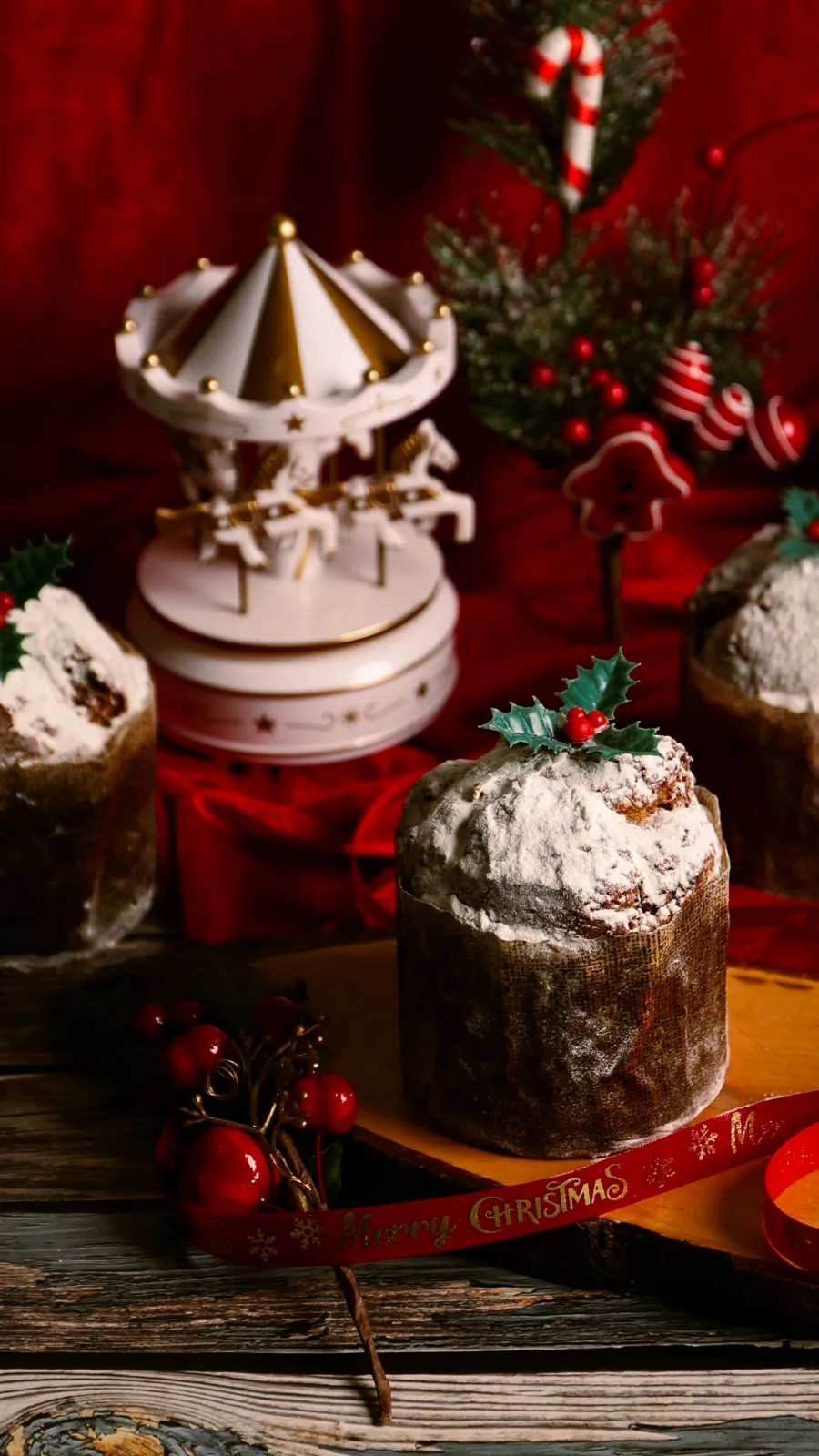
Stir-Up Sunday and the Christmas Pudding
In many British homes, the countdown to Christmas traditionally started in the kitchen on Stir-Up Sunday – the last Sunday before Advent. In 2026, it falls on 22 November, with Advent beginning on 29 November.
The name comes from the Church of England's Book of Common Prayer. The collect traditionally used on the Sunday before Advent begins: "Stir up, we beseech thee, O Lord, the wills of thy faithful people…" The prayer dates back to the early days of the Book of Common Prayer.
The connection with Christmas pudding developed over time. The words were a timely reminder to get stirring in the kitchen, and the Sunday became associated with preparing the pudding ahead of Christmas.
By the Victorian period, the Christmas pudding had become firmly established as a familiar part of the festive meal. Families would make it in advance, giving it time to mature before Christmas Day.
Charles Dickens captured the moment in A Christmas Carol (1843). The Cratchits' kitchen fills with "a smell like a washing-day" from the pudding cloth, before Mrs Cratchit appears "flushed, but smiling proudly – with the pudding, like a speckled cannon-ball".
In many households, everyone took a turn stirring the thick mixture with a wooden spoon. One tradition was to stir from east to west, in honour of the wise men travelling from the east, while making a wish. Some families also added a silver coin for luck.
How it happens now: Plenty of keen bakers still keep Stir-Up Sunday alive, but many households now buy their pudding ready-made. Instead of hours boiling in a cloth, a few minutes in the microwave can be enough on Christmas Day.
There are also plenty of alternatives, including chocolate yule logs, cheesecakes and other desserts for anyone who isn't keen on dried fruit.
Saving Up: From Goose Clubs to Christmas Clubs
Before credit cards and online shopping, paying for Christmas often meant planning ahead and putting money aside.
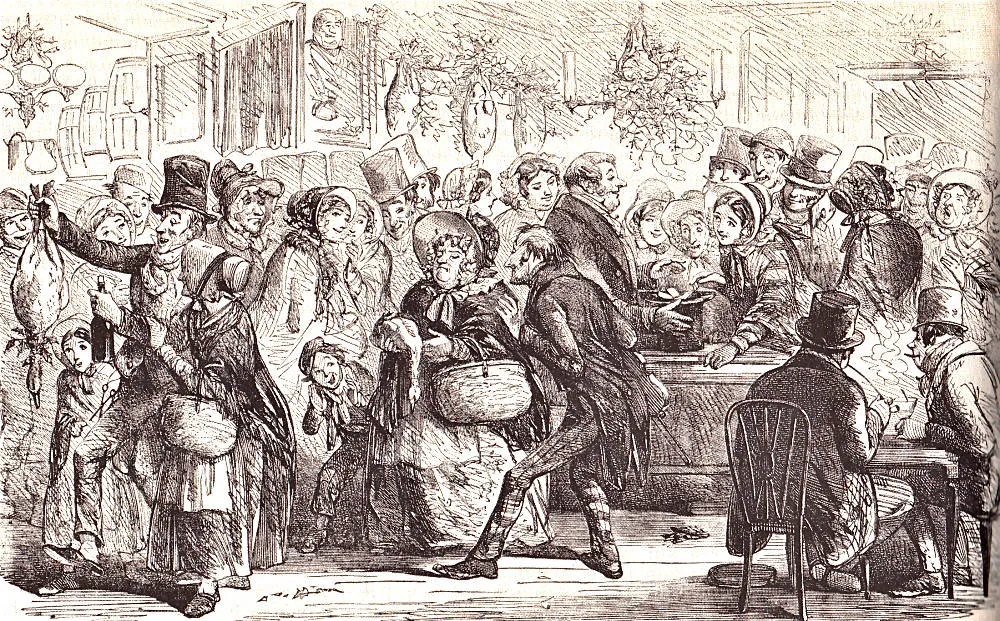
In Victorian Britain, pubs ran goose clubs. Members paid towards the cost of a goose, often in weekly instalments, and received their bird for Christmas.
They were common enough to appear in fiction. In Arthur Conan Doyle's Sherlock Holmes story The Adventure of the Blue Carbuncle (1892), Henry Baker explains that the landlord of the Alpha Inn "instituted a goose club, by which, on consideration of some few pence every week, we were each to receive a bird at Christmas".
The idea was not limited to fiction. In his 1883 account The Queen of Clubs, journalist James Greenwood described both grocers' Christmas savings clubs and goose clubs run by public houses.
Grocers' clubs allowed customers to put money aside during the year for Christmas shopping. Goose clubs worked differently, with members paying towards a bird for the festive table.
Dickens's illustrator Phiz also drew a goose club scene for the Illustrated London News Christmas supplement on 24 December 1853.
These schemes gave families a way to spread the cost of Christmas rather than finding all the money at once.
How it happens now: November shopping is dominated by sales events such as Black Friday and Cyber Monday.
Instead of putting money aside at a local shop, many people browse deals on their phones, use buy-now-pay-later services or share online wish lists with family and friends.
The way we shop has changed a great deal, but the challenge of keeping Christmas spending under control is much the same.
High Street Markets and Santa's Grottos
For generations, getting ready for Christmas meant wrapping up warm and heading to the local high street or city centre.
Town markets played an important part in festive shopping. Stalls sold seasonal fruit and vegetables, festive food and decorations, and some offered real Christmas trees.
Department stores also became part of the experience, drawing families in with decorated interiors and elaborate window displays.
One tradition that became especially popular was visiting Santa's Grotto. In 1879, David Lewis opened "Christmas Fairyland" at his Lewis's Bon Marché store in Liverpool. It is widely described as an early Santa's grotto, and Guinness World Records lists it as the oldest.
Edinburgh has a possible earlier claim to a Christmas grotto. Newspaper reports from December 1870 describe Houlden Brothers on Nicolson Street as being decorated with a "Magic Grotto" and a "Fairy Christmas Tree" – nine years before Liverpool's Christmas Fairyland opened.
The Edinburgh report is evidence of an earlier festive grotto, although it does not by itself establish that it was the first Santa's grotto.
For generations of children, a visit to see Father Christmas became a highlight of the Christmas shopping trip.
How it happens now: Many families still enjoy visiting Christmas markets, seeing the lights and taking children to meet Santa.
However, much of our Christmas preparation now happens without leaving home. Supermarkets offer online delivery slots, presents are ordered with a few clicks and parcels arrive on doorsteps right up until Christmas Eve.
The traditional shopping trip hasn't disappeared, but it now competes with the convenience of online shopping.
Advent Calendars: Paper Pictures to Luxury Boxes
Counting down the days of December used to be a simple affair.
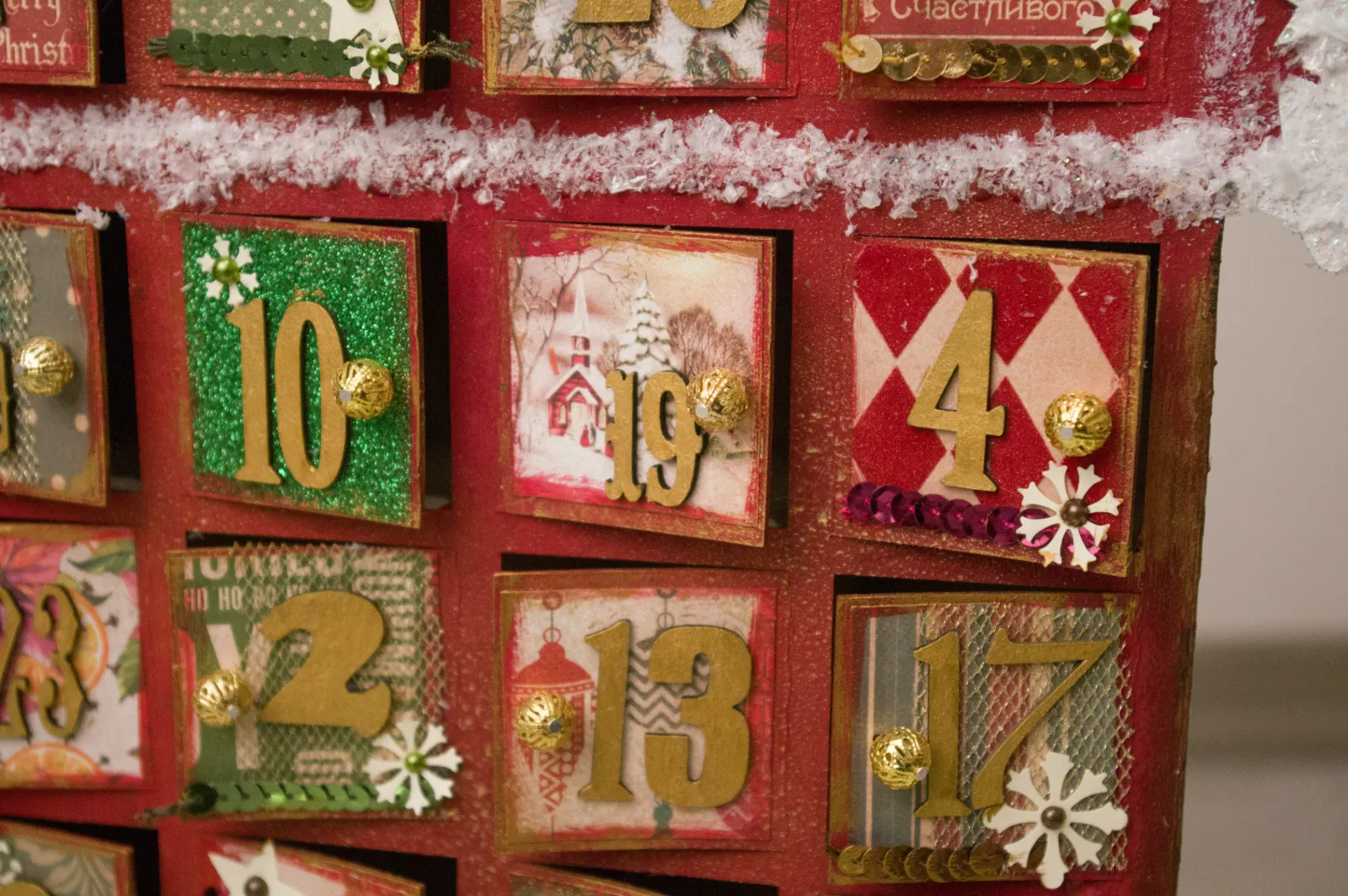
The printed Advent calendar developed in Germany. Munich printer Gerhard Lang is widely credited with producing the first commercial version in 1908. His early calendar used printed pictures to mark the days leading up to Christmas.
In Britain, Advent calendars appeared in high street shops in November 1956, selling for two shillings. A Leicester newspaper advert described one as "an unusual calendar for Christmas, especially for children".
In 1959, the British Polio Fellowship produced 80,000 Advent calendars, alongside millions of Christmas cards. The work helped raise funds for the organisation and provided employment for its members.
For many years, the familiar British version was a cardboard sheet of festive pictures, with a nativity scene often appearing on Christmas Eve.
Chocolate came later. Cadbury says it produced its first chocolate Advent calendar in 1971. Chocolate calendars became much more familiar in the decades that followed.
How it happens now: Modern Advent calendars come in all shapes and sizes.
Alongside standard chocolate calendars for children, shops now sell calendars filled with everything from beauty products and coffee to cheese, socks, toys and Lego sets.
What started as a simple way to count down to Christmas has become a shopping category of its own.
A Different Christmas, but Some Traditions Remain
The way British families prepare for Christmas has changed hugely over the generations.
We have moved from pub-based goose clubs and grocers' Christmas savings schemes to Black Friday, puddings boiled in a cloth to microwave desserts, and paper Advent calendars to luxury gift boxes.
Yet some things stay familiar. Families still gather around the Christmas table, children still get excited about the big day, and many people keep up the traditions they grew up with.
The details change, but the memories tend to stay with us.
Next week, in Part 2 of Christmas Past & Present, I'll look at how we decorate our homes – from handmade paper chains and real holly to pre-lit trees and outdoor LED displays.
I'd love to hear your memories.
Did your family make the Christmas pudding on Stir-Up Sunday? Did your parents or grandparents save through a Christmas club, or did you visit a department store Santa's Grotto as a child?
Share your memories in the comments below.
Sources
- Charles Dickens, A Christmas Carol (1843) – https://www.gutenberg.org/files/46/46-h/46-h.htm
- Arthur Conan Doyle, The Adventure of the Blue Carbuncle (1892) – https://www.gutenberg.org/files/1661/1661-h/1661-h.htm
- Phiz, The Goose Club, Illustrated London News, 24 December 1853 – https://victorianweb.org/art/illustration/phiz/1.html
- English Heritage – A History of the Christmas Pudding – https://www.english-heritage.org.uk/visit/inspire-me/history-of-the-christmas-pudding/
- James Greenwood, The Queen of Clubs (1883) – https://www.victorianlondon.org/publications7/odd-18.htm
- English Heritage – Victorian Christmas traditions – https://www.english-heritage.org.uk/christmas/victorian-christmas-traditions
- Edinburgh Evening News – Edinburgh's grotto claim – https://www.edinburghnews.scotsman.com/whats-on/arts-and-entertainment/can-edinburgh-claim-worlds-first-santas-grotto-609438
- National Trust – Advent calendar of Christmas treasures – https://www.nationaltrust.org.uk/discover/history/art-collections/advent-calendar-of-christmas-treasures
- Christian Today – The history of the Advent calendar – https://www.christiantoday.com/news/the-history-of-the-advent-calendar
- British Polio Fellowship – 87th anniversary – https://britishpolio.org.uk/bpf-celebrate-its-87th-anniversary/
- Cadbury Gifts Direct – Chocolate Christmas traditions – https://www.cadburygiftsdirect.co.uk/chocolate-christmas-traditions
- Church of England – The Calendar – https://www.churchofengland.org/prayer-and-worship/worship-texts-and-resources/common-worship/churchs-year/calendar



Loading comments…